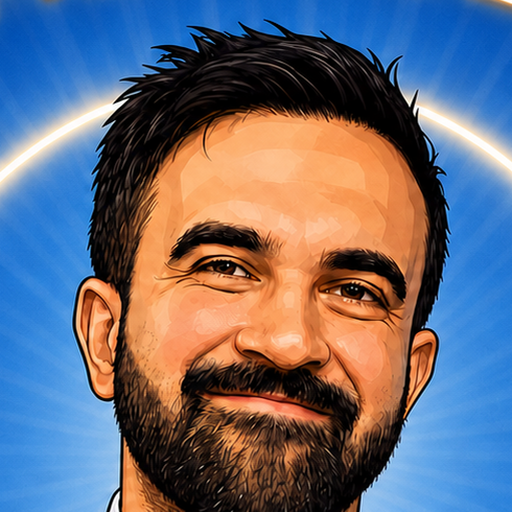
 Abdul El Sayed won Michigan's Democratic nomination for the United States Senate after a close primary against Representative Haley Stevens. He now faces Republican Mike Rogers on 3 November for the seat opened by Senator Gary Peters' retirement.
The race is competitive. Michigan voted for Donald Trump in 2016 and 2024 and for Joe Biden in 2020. Rogers lost the state's other Senate race in 2024 by about 19,000 votes, showing both his statewide strength and his vulnerability.
El Sayed has a credible route through Democratic unity, a strong volunteer campaign and an affordability message. Rogers has higher statewide familiarity, Trump's endorsement and major Republican advertising support. Fresh polling after the nominations is needed before either candidate can honestly be called the favourite.
What changed when the seat opened
Gary Peters is retiring, so Democrats are defending an open seat rather than running with an incumbent. That removes the normal advantage of a sitting senator and makes Michigan one of the races most likely to affect control of the Senate.
Rogers is not an unknown challenger. He represented Michigan in the House and came within about 19,000 votes of winning the state's other Senate seat in 2024. El Sayed enters the general election with a statewide win of his own, but his primary margin was under one point.
The practical change is that both parties now have a plausible route. Democrats need to keep nearly all of the Stevens coalition while expanding turnout. Republicans need Rogers to repeat his 2024 performance and gain the small number of voters who denied him the seat last time.
How the race looks now
The honest rating is close and uncertain. Gonzales Political Report rated the contest a toss up before the primary. A late Epic MRA poll reported by Le Monde put Rogers at 46 percent and El Sayed at 43 percent, but that poll was taken before voters knew the final matchup. It is a useful warning, not a forecast.
El Sayed's advantages are the national mood, a volunteer network that survived record outside spending and the start of Democratic unity. Stevens has said she is willing to campaign for him, and Michigan Democrats placed him at the centre of their first post primary unity event.
Rogers has important advantages too. He has already run statewide, Trump is backing him and the Republican Senate campaign arm reserved about 45 million dollars in Michigan advertising. El Sayed must introduce himself beyond the Democratic primary electorate while answering attacks on his ideology, faith, immigration policy and position on Israel.
The decisive indicators will be fresh head to head polling, whether Stevens voters consolidate, fundraising after the primary and whether El Sayed can improve with independents without weakening the direct programme that won him the nomination.
El Sayed and Rogers on healthcare and the economy
Healthcare. El Sayed supports Medicare for All, breaking up large healthcare companies and federal protection for reproductive and LGBTQ healthcare. Rogers supports the Trump tax law and its rural hospital fund. His campaign has discussed preserving rural hospitals and reducing costs, but it does not offer a universal federal insurance plan.
Taxes and corporate power. El Sayed supports taxing billionaire wealth, public election funding, limits on outside spending and overturning Citizens United. Rogers supports making Trump's tax cuts permanent, including tax relief on tips, overtime and Social Security, and argues that lower taxes and regulation will lift wages and manufacturing.
The choice is therefore not whether household costs matter. Both say they do. The difference is method. El Sayed proposes a larger federal role, universal healthcare and restrictions on concentrated wealth. Rogers proposes tax cuts, business growth, domestic energy and close cooperation with the Trump administration.
El Sayed and Rogers on immigration, war and rights
Immigration. El Sayed wants to abolish ICE and move enforcement into a new structure with a secure border, immigration courts and a pathway to citizenship. Rogers praises ICE enforcement and supports the Trump border agenda. This is one of the clearest divisions in the race.
Foreign policy. El Sayed supports an immediate arms embargo on Israel, enforcement of human rights conditions on military aid, diplomacy with Iran and continued support for Ukraine. Rogers supported the United States airstrikes on Iran and presents himself as a national security ally of Trump. Their approaches to military power are fundamentally different.
Democratic rules. El Sayed wants to abolish the Senate filibuster, reform the Supreme Court and expand automatic registration and early voting. Rogers is running as a partner for the current Republican administration. On abortion, El Sayed supports federal protection for reproductive healthcare. Rogers has said he would not support a national ban and would leave abortion law to states, but his earlier House record included support for federal restrictions.
What El Sayed and Mamdani share
Both centre affordability and argue that big donors and corporate power block popular change. Both used volunteer heavy campaigns, speak directly about the cost of daily life and oppose American military support for Israel's conduct in Gaza.
El Sayed openly used Mamdani's New York victory as a model. His campaign argued that a people powered economic message could defeat better funded establishment opponents. That prediction proved true in the primary.
They also represent a wider change in who can win public office. Mamdani is New York City's first Muslim mayor. El Sayed would become the first Muslim United States senator if he wins in November.
Where El Sayed and Mamdani differ
Mamdani is a democratic socialist. El Sayed describes himself as a capitalist who opposes monopolies. Their economic instincts overlap, but their stated political identities are not the same.
Their jobs are different. Mamdani runs a city and has focused on rent, buses, childcare, groceries and municipal services. El Sayed is seeking a federal legislative vote on healthcare, taxes, immigration agencies, judges, military aid and the filibuster.
Medicare for All is El Sayed's defining federal policy. Mamdani supports universal public provision but his signature programme is a New York affordability package, not a national health insurance bill. Mamdani can direct city agencies. A senator cannot run Michigan's cities or impose New York's municipal programme.
What Mamdani said about the nomination
Before the primary, Mamdani did not endorse El Sayed. In an official July interview he said he had met El Sayed once or twice and that his endorsements were focused on New York City races.
After El Sayed won, Mamdani congratulated him publicly. He highlighted three parts of the campaign: taking big money out of politics, putting money back in voters' pockets and passing Medicare for All. He also noted that El Sayed had prevailed despite more than 60 million dollars in outside spending.
Mamdani rejected the Republican attempt to call El Sayed a mini Mamdani. His point was that El Sayed is his own candidate, not a copy. He added a joke that El Sayed could lift more weight than he could.
That sequence matters. There was no preprimary endorsement or close personal alliance. There is now clear public solidarity after the nomination and a shared argument about affordability, political money and progressive power.
The November test
El Sayed can win, but the current record does not justify confidence or defeatism. He needs a united Democratic vote, stronger support among independents and a disciplined answer to the advertising campaign already being prepared against him.
Rogers can win, but he is not inevitable. He lost a statewide Senate race two years ago even as Trump carried Michigan, and his close identification with the administration gives El Sayed a clear opponent on healthcare, immigration, taxes and war.
The page will be updated when credible post nomination polling, certified primary totals, debate commitments and new campaign finance reports are public. Those facts will show whether the race is moving, rather than simply generating more noise.
Public record
- El Sayed won the Democratic nomination for Michigan's open United States Senate seat.
- Rogers lost Michigan's 2024 Senate election by about 19,000 votes and is running again with Trump's endorsement.
- The latest cited preprimary poll put Rogers three points ahead, but there is no reliable post nomination polling yet.
- El Sayed and Rogers differ sharply on Medicare for All, ICE, military policy, taxation and the filibuster.
- Mamdani did not endorse before the primary but congratulated El Sayed after the nomination.
- El Sayed must defeat Rogers on 3 November before he becomes a senator.
What to check next
Replace election night totals with the final Michigan canvass when the state certifies the result.
Add credible head to head polls conducted after both nominees were known.
Record invitations, acceptances and any direct El Sayed and Rogers debates.
Record any formal Mamdani endorsement, fundraising appearance or joint campaign event.
Track outside spending and identify the organizations funding general election advertising on both sides.
Update the page with the general election result and the consequences for Senate control.